
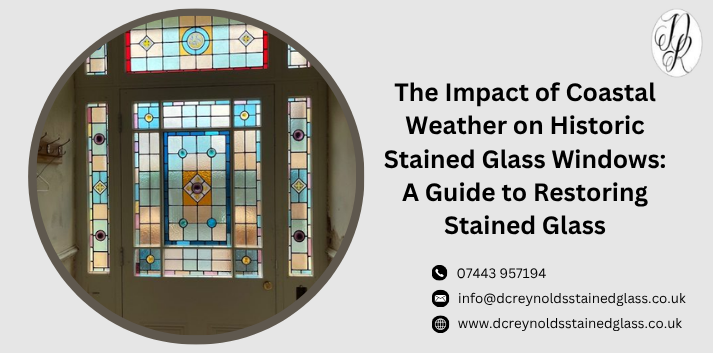
The salt-laden air, fierce sea winds, and high ambient moisture in Dorset and its surrounding areas corrode the traditional lead cames of heritage-stained-glass windows in period properties. If left ignored, not only will the stained glass in Dorset heritage properties bow, but they will also be unable to prevent water from leaking into the property.
If you still don’t call the professionals to restore the stained glass windows, then be ready to witness the heritage windows rattle and break right in front of your eyes when the weather turns.
What Are The Telltale Signs Of Damaged Heritage Windows?
If the stained-glass windows of your heritage property exhibit the following telltale signs, call the professionals who excel at their restoration right away.
Rattling and Vibration
If it is a windy day and you hear the windows rattle or vibrate violently, then it means the internal weather-proofing cement has failed.
Daylight Gaps
If you see daylight peeking through the stained-glass pieces and their lead cames, it means that when the rain starts, stormwater and moisture-laden wind will also get inside your period property.
White Powdery Oxidation
If the lead comes on the windows of a heritage property and has a heavy white crust, it means they are severely corroded and need professional replacement.
Bowing or Bulging
When the window panels of a heritage property have a noticeable curve, it indicates compromised structural integrity and that the entire window hardware requires professional replacement.
How Professionals Restore Lead-Stained Glass Of Heritage Properties?
When it comes to restoring the historic windows of a heritage property, you need to call in the professionals and shun the DIY approach.
Professional restorers of stained glass in Dorset follow a meticulous and centuries-old process that blends art with structural engineering. Their bespoke restoration process consists of the following steps.
Step 1: Safe Extraction and Assessment
The experts will carefully remove the stained-glass windows from their timber or stone frames. Before taking the stained glass panels off-site to a dedicated studio, the on-site historic panels are weather-proofed.
Step 2: Deconstruction and Cleaning
At the stained glass restoration studio, the experts will carefully strip away the aged, brittle lead glazing.
After that, the experts will gently clean each piece of stained glass with special solutions that remove decades of baked-on grime and sea salt, all without damaging any of the delicate painted details.
Step 3: Re-leading and Cementing
The last step of the process is re-leading using modern, high-quality lead cams, while ensuring the profiles match the original design.
After that, the experts reassemble the windows and apply waterproof cement to the gaps between the lead cames and the stained glass. This is a crucial step that provides the restored heritage windows with the rigidity to withstand future coastal gales.
Safeguarding Your Architectural Heritage Today
Do not ignore a bowing or rattling stained glass window for long. If you do that, a minor inconvenience can quickly turn into a very expensive structural emergency for the property you own.
Arrange a professional site survey today by contacting sector experts like D C Reynolds Stained Glass. Stained glass experts will develop bespoke yet effective methods to assess the overall health of heritage lead-stained glass. Additionally, by adopting specialist restoration now, you will be stopping coastal decay in its tracks.
Furthermore, only professionals can help you secure these vibrant, light-filled pieces of British history for future generations to marvel at.